How Much Does Insurance Cost for a Small Business? Real Numbers Across the Coverage Types That Matter

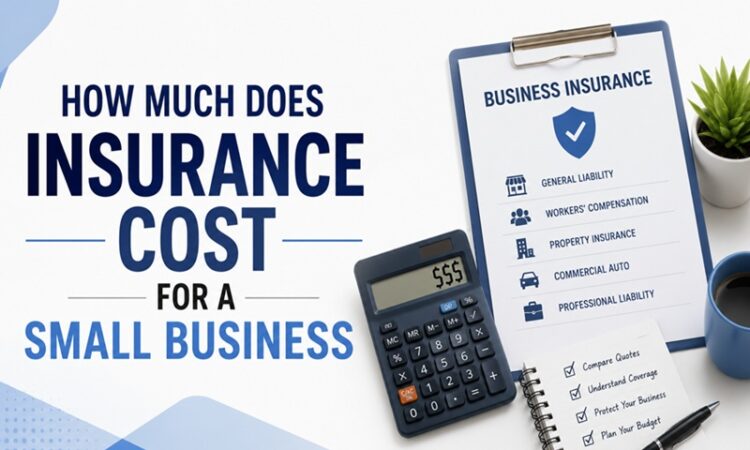
Small business insurance pricing is genuinely difficult to quote in the abstract because the factors that determine premium are specific to each business. Industry, location, revenue, number of employees, claims history, and coverage limits all affect what a business pays, and the range between the lowest and highest premiums for the same coverage type is wide enough that averages can be misleading without context.
That said, real premium data across the coverage types most small businesses need provides a useful planning baseline, and understanding what drives cost variation helps business owners evaluate quotes rather than simply accepting the first one they receive.
General Liability Insurance
General liability is the foundational coverage for most small businesses. It covers third-party bodily injury and property damage claims arising from business operations, products, or completed work. If a customer slips and falls on your premises, if your work damages a client’s property, or if a product you sell causes injury, general liability is the coverage that responds.
The national median premium for small business general liability insurance runs approximately $42 per month or $500 per year for a $1 million per occurrence and $2 million aggregate policy, according to data from Insureon covering small business policyholders. However, that median covers an enormous range of businesses and isn’t particularly useful without industry context.
Low-risk businesses including consultants, freelancers, and professional service firms with no physical customer interaction often pay $400 to $600 annually. Moderate-risk businesses including retail stores, restaurants, and contractors pay $600 to $2,000 annually. Higher-risk businesses including construction contractors, manufacturers, and businesses with significant customer foot traffic pay $2,000 to $10,000 or more annually.
The industry classification assigned to your business is the single largest driver of general liability premium. Insurance companies use classification codes to group businesses by risk profile, and the same revenue level generates very different premiums depending on whether the business is a software consultant or a roofing contractor. Getting the correct classification and ensuring your operations are accurately described to the insurer prevents both overpayment and coverage gaps.
Professional Liability Insurance
Professional liability insurance, also called errors and omissions insurance or E&O, covers claims arising from professional services or advice that cause financial harm to a client. It’s essential for any business where clients rely on professional expertise including consultants, accountants, attorneys, architects, engineers, IT professionals, marketing agencies, real estate agents, and a wide range of other professional service providers.
Annual premiums for professional liability insurance for small businesses typically run between $500 and $3,000 for most professional service categories. Technology companies and IT consultants pay $1,000 to $3,000 annually for basic coverage. Management consultants and marketing agencies typically pay $900 to $2,500. Accountants and bookkeepers pay $700 to $2,000. Healthcare professionals face significantly higher premiums that vary by specialty, with medical malpractice insurance occupying its own specialized market.
Coverage limits and deductibles drive significant variation within these ranges. A $1 million per claim and $2 million aggregate policy costs more than a $500,000 per claim policy, and a $1,000 deductible costs more than a $5,000 deductible in premium terms. Matching coverage limits to the realistic exposure from the largest plausible claim rather than defaulting to the minimum available coverage is worth the additional premium for businesses where a significant professional liability claim is financially possible.
Claims history is a significant pricing factor in professional liability insurance. A business with prior claims pays more than an identical business with no claims history. For first-year businesses without claims history, insurers typically underwrite based on the business type and the principals’ professional background rather than actual loss experience.
Business Owner’s Policy
A business owner’s policy, commonly called a BOP, bundles general liability and commercial property insurance into a single policy that typically costs less than purchasing the coverages separately. BOPs are designed for small to mid-sized businesses and are available for most business types that meet the insurer’s eligibility requirements.
The median annual cost for a BOP covering small businesses runs approximately $57 per month or $684 per year according to Insureon data, though this again reflects significant variation by industry and coverage level. A retail store with $500,000 in property coverage might pay $1,200 to $2,500 annually. A home-based consultant with minimal property exposure might pay $400 to $800 annually. A restaurant or food service business pays more than either due to elevated liability risk.
BOPs typically include business interruption coverage as part of the package, which covers lost revenue and ongoing fixed expenses if the business is forced to close temporarily due to a covered property loss. This coverage, also called business income insurance, is valuable enough that its inclusion in a BOP often makes the bundled product meaningfully more cost-effective than standalone general liability plus property coverage without business interruption.
Not all businesses are eligible for a BOP. Insurers typically restrict BOP eligibility to businesses below certain revenue thresholds, certain square footage limits, and lower-risk classifications. Businesses that don’t qualify for a BOP need to purchase commercial property and general liability coverage separately, which typically costs more for equivalent coverage.
Workers Compensation Insurance
Workers compensation insurance is legally required for businesses with employees in almost every US state, with the specific requirements varying by state. It covers medical expenses and lost wages for employees injured on the job and protects the business from employee lawsuits arising from workplace injuries.
Workers compensation premiums are calculated based on total payroll and employee job classification codes that reflect the injury risk of the specific work being performed. The premium formula is straightforward: a rate per $100 of payroll is applied to each classification code, and the rates vary substantially by classification. A clerical office employee might generate a rate of $0.30 per $100 of payroll. A roofing contractor employee generates rates of $20 to $30 or more per $100 of payroll, reflecting the dramatically higher injury risk.
For a business with $300,000 in annual payroll and a moderate-risk workforce, workers compensation premiums typically run between $3,000 and $15,000 annually depending on industry and state. High-risk industries including construction, manufacturing, and transportation generate significantly higher premiums relative to payroll than office-based businesses.
State insurance funds and competitive private insurers both provide workers compensation coverage, and the market structure varies by state. Some states operate monopolistic state funds where all workers compensation must be purchased from the state. Others have competitive markets where private insurers compete with the state fund. Rates in competitive markets vary between insurers, making comparison shopping at renewal meaningful in a way that it isn’t in monopolistic state fund states.
Experience modification factors adjust workers compensation premiums based on the business’s actual claims history relative to the expected claims history for its industry and payroll level. A business with fewer claims than expected for its size earns a modification factor below 1.0 that reduces its premium. A business with more claims than expected receives a modification factor above 1.0 that increases premium. Experience modification compounds over time, making injury prevention programs a direct premium management tool for businesses large enough to generate a credible experience modification factor.
Commercial Auto Insurance
Businesses that own vehicles or use vehicles in business operations need commercial auto insurance. Personal auto policies specifically exclude business use in most cases, meaning a vehicle used to deliver products, transport clients, or travel between job sites isn’t covered by personal auto insurance for those activities regardless of whether the vehicle is personally or commercially owned.
Commercial auto premiums for small businesses depend on the number of vehicles, the type of vehicles, how they’re used, the driving records of employees who drive them, and the coverage limits selected. A single commercial vehicle driven primarily for local business errands by a business owner with a clean driving record typically costs $1,200 to $2,400 annually for a standard commercial auto policy. Fleets of multiple vehicles, vehicles used for deliveries or transportation services, and drivers with poor records generate higher premiums.
If the business uses personally owned vehicles for business purposes without commercial auto coverage or a business use endorsement on the personal policy, it’s operating with a coverage gap that creates personal financial exposure for the vehicle owner and potential business liability exposure if an accident occurs during business use.
Hired and non-owned auto insurance is a separate coverage that applies when employees use their personal vehicles for business purposes or when the business rents vehicles. It covers the business’s liability exposure from vehicles it doesn’t own but that are used in business operations, which personal auto policies don’t cover for business-use incidents.
Cyber Liability Insurance
Cyber liability insurance covers costs arising from data breaches, ransomware attacks, and other cyber incidents including notification costs, credit monitoring for affected individuals, legal defense, regulatory fines, and business interruption from system downtime. It has moved from a specialty coverage to a standard recommendation for most businesses that handle customer data or depend on technology systems.
Annual premiums for cyber liability insurance for small businesses typically run between $500 and $3,500 for $1 million in coverage. Businesses in healthcare, financial services, and retail that handle sensitive personal or financial data pay higher premiums than businesses with minimal data exposure. The hardening of the cyber insurance market following the significant ransomware losses of 2020 through 2022 has resulted in higher premiums, stricter underwriting requirements including multi-factor authentication and backup systems, and more restrictive policy terms than were available before that period.
The underwriting process for cyber insurance now includes detailed questionnaires about security practices, and businesses without basic security controls including MFA, endpoint protection, and backup systems either can’t obtain coverage or pay substantially more for it. This creates an interesting dynamic where improving security practices reduces insurance cost rather than only reducing risk.
Key Person Insurance
Key person insurance, a form of life or disability insurance owned by the business on a key employee or owner, protects the business against the financial impact of losing a critical individual through death or disability. The policy pays the business rather than the individual’s family, providing capital to recruit and train a replacement, service existing contracts, or manage the transition period.
Premiums depend on the insured individual’s age, health, and the coverage amount, which is typically calculated based on the key person’s contribution to business revenue or the estimated cost of replacing them. Annual premiums for a $1 million term life key person policy on a healthy 40-year-old business owner typically run $1,000 to $3,000 annually. Disability-based key person coverage costs more than life coverage because disability is statistically more likely than death during working years.
What Drives Small Business Insurance Costs: The Summary
Across all coverage types, several factors consistently affect premium levels in predictable ways.
Industry and risk classification is the most significant factor. A law firm and a landscaping company both employ ten people with similar payrolls, but their insurance costs are dramatically different because their risk profiles are completely different.
Revenue and payroll determine the scale of the exposure and therefore the premium for coverages including general liability, professional liability, and workers compensation. Higher revenue and payroll generally produce higher premiums, though the relationship isn’t always linear.
Claims history is a pricing signal that follows a business across renewals and markets. A clean claims history produces better pricing than equivalent businesses with prior losses, and the premium impact of significant claims can persist for three to five years.
Location affects pricing through local litigation environment, regional weather risk for property coverage, and state-specific insurance market regulations. Businesses in states with higher litigation rates and larger average jury awards pay more for liability coverage than equivalent businesses in lower-litigation states.
Coverage limits and deductibles provide levers for managing premium. Higher deductibles reduce premium but increase the out-of-pocket cost when a claim occurs. Lower coverage limits reduce premium but leave the business exposed above the limit. The right balance depends on the business’s financial capacity to absorb losses and the maximum realistic exposure from the largest plausible claim.
Getting Accurate Quotes
The most reliable way to understand what insurance actually costs for a specific business is to get multiple quotes from multiple insurers or through a broker who accesses multiple markets simultaneously.
Online commercial insurance platforms including Next Insurance, Hiscox, and Thimble provide instant quotes for common small business coverage types and are appropriate for straightforward insurance needs at lower price points. Independent insurance brokers who specialize in commercial lines access a broader range of markets and coverage options, provide advice on coverage structure, and become advocates for the business in the claims process in ways that direct writers don’t.
Comparing quotes requires comparing equivalent coverage terms rather than just premium amounts. A lower premium for a policy with a higher deductible, lower limits, or more exclusions isn’t necessarily a better deal than a higher premium for more comprehensive coverage. Understanding what each policy actually covers and where its limitations are requires reading the policy documents rather than just comparing summary sheets.
The Independent Insurance Agents and Brokers of America maintains a directory of independent insurance agents across the country who represent multiple insurers and can provide comparative quotes across coverage types, and is the most reliable resource for finding a qualified commercial insurance professional who can advise on coverage needs rather than selling a single company’s products.
The Total Picture
A typical small business without employees in a moderate-risk industry, such as a consulting firm or retail shop, might pay $1,500 to $3,500 annually for a combination of general liability, professional liability, and a BOP. Adding workers compensation for a small team of employees typically adds $2,000 to $8,000 or more depending on industry. Cyber liability adds $500 to $2,500. Commercial auto adds $1,200 to $3,000 per vehicle.
A complete insurance program for a small business with five employees in a moderate-risk industry might total $5,000 to $15,000 annually in aggregate premiums. Higher-risk industries, larger teams, and businesses with prior claims history pay more. Lower-risk businesses with clean histories and higher deductibles pay less.
The most expensive insurance is the coverage that isn’t in place when a loss occurs. Building an insurance program that addresses the realistic risks of the specific business, at coverage levels that provide meaningful protection rather than just satisfying a minimum requirement, is the investment that makes the premiums paid for all the years without significant claims worthwhile