Business Insurance for Beauty Salons: What You Need, What It Costs, and What Happens Without It

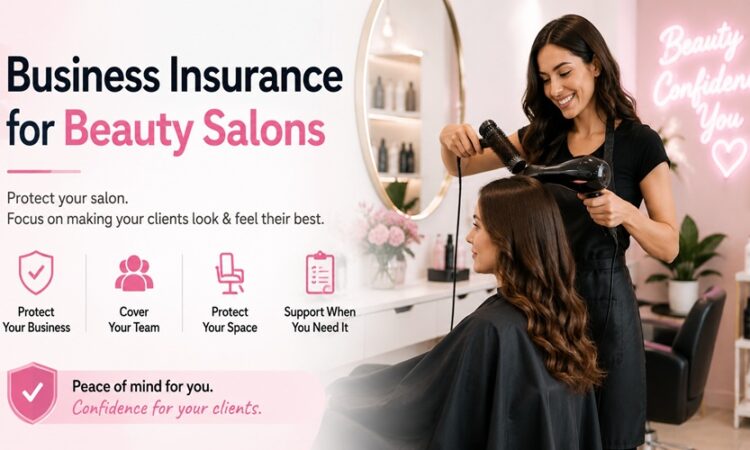
A beauty salon carries more risk than most service businesses. You’re working with chemicals, heat, sharp tools, and customers who have strong opinions about the results. A client has an allergic reaction to a hair dye. A stylist drops scissors on a customer’s foot. A burst pipe damages expensive equipment and forces a two-week closure. A former employee claims wrongful termination.
Each of those scenarios is a real claim that real salons have faced. What separates a manageable setback from a business-ending one is almost always whether the right insurance was in place.
Why Salon Insurance Is Different From General Business Insurance
Beauty salons have specific risk profiles that standard business insurance policies don’t always cover adequately. The combination of professional services, physical treatments, chemical products, employed or booth-renting stylists, and walk-in customer traffic creates overlapping liability exposures that require several coverage types working together.
A general liability policy alone isn’t enough. A commercial property policy alone isn’t enough. Salon owners who assume that one policy covers everything often discover the gaps at the worst possible moment, when a claim is denied because the coverage type that would have applied wasn’t in place.
The Core Coverage Types Every Salon Needs
General Liability Insurance
General liability covers third-party bodily injury and property damage claims. In a salon context, this means a customer who slips on a wet floor, trips over equipment, or is injured in any way on your premises that isn’t directly related to the service being performed.
Coverage typically includes legal defense costs, settlements, and judgments up to the policy limit. Annual premiums for salon general liability typically run between $300 and $1,000 for small to mid-sized salons, depending on location, revenue, and claims history.
Professional Liability Insurance
Also called errors and omissions insurance or, in the beauty industry specifically, malpractice insurance, professional liability covers claims arising directly from the services you provide. A chemical burn from a relaxer treatment. Hair damage from a color service gone wrong. A skin reaction to a facial product. Nail damage from an incorrectly applied gel set.
These claims fall outside general liability because they arise from the professional service itself rather than a premises hazard. For salons, professional liability is not optional coverage. It’s the policy that addresses the most common type of salon-specific claim. Annual premiums typically run between $500 and $2,500 depending on services offered and revenue.
Commercial Property Insurance
Property insurance covers physical assets including the building if owned, equipment, furniture, inventory, and supplies against fire, theft, vandalism, and certain water damage events. For a salon, the equipment list alone — styling chairs, shampoo bowls, dryers, color processing equipment, tools — represents a significant replacement cost that most owners would struggle to absorb out of pocket.
Business interruption coverage is worth adding to property insurance. If a covered event forces the salon to close temporarily, business interruption pays for lost revenue and ongoing fixed expenses during the closure period. The cost of a two-week closure following a pipe burst or fire is often more damaging than the physical damage itself.
Workers Compensation Insurance
If your salon has employees, workers compensation is legally required in almost every US state. It covers medical expenses and lost wages for employees injured on the job, and it protects the salon from employee lawsuits arising from workplace injuries.
Salon workers face genuine occupational hazards. Chemical exposure, repetitive strain injuries, cuts, burns, and slip-and-fall incidents all happen in salon environments. Workers comp premiums for salons are calculated based on payroll and employee classification, typically running between 1 and 3 percent of total payroll annually.
Product Liability Insurance
If your salon sells retail products — shampoos, treatments, styling products, skin care — product liability insurance covers claims arising from those products causing harm. This coverage is sometimes included within general liability policies and sometimes requires a separate endorsement. Confirm with your insurer whether product sales are covered under your existing policy before assuming they are.
Booth Renters: A Separate Insurance Situation
Salons that operate on a booth rental model rather than employing stylists directly face a different insurance structure that’s widely misunderstood.
The salon owner’s insurance does not cover booth renters. Each booth renter is an independent contractor running their own business and needs their own professional liability and general liability coverage. Salon owners who assume their policy extends to renters are exposed to claims they didn’t account for.
Conversely, booth renters who assume the salon’s insurance covers their work are operating without protection for their largest professional risk. Individual stylist liability policies are available through beauty industry associations and specialty insurers for as little as $100 to $300 annually, making the cost barrier genuinely low.
Smart salon owners require proof of insurance from every booth renter before they set foot behind a chair. This protects the salon from vicarious liability exposure and ensures renters aren’t operating exposed.
Optional Coverage Worth Considering
Beyond the core policies, several additional coverage types address specific salon risks that standard policies may not cover.
Cyber Liability Insurance. If your salon stores client information — appointment history, payment details, contact information — a data breach creates both legal notification obligations and potential liability. Cyber insurance covers breach response costs, notification expenses, and liability claims. As salon management software becomes more sophisticated, the data held by salons becomes more valuable to attackers.
Employment Practices Liability Insurance (EPLI). Claims of wrongful termination, discrimination, harassment, or failure to promote are more common in service businesses with significant turnover than most owners expect. EPLI covers legal defense and settlements arising from employment-related claims. For salons with multiple employees, the exposure is real and the cost of defense without coverage is substantial.
Commercial Auto Insurance. If any business vehicle is used for salon operations, such as mobile beauty services, product deliveries, or travel between locations, personal auto insurance does not cover business use. A separate commercial auto policy or a business use endorsement on a personal policy is required.
What Salon Insurance Typically Costs
Total annual insurance costs for a typical small to mid-sized salon with employees generally fall between $2,000 and $6,000 when combining general liability, professional liability, property, and workers compensation. Larger salons with more staff, higher revenue, and more comprehensive coverage spend more. Solo stylists operating from a single chair spend significantly less.
Several factors affect pricing across all coverage types. Location matters because urban markets have higher claim costs and premiums. Services offered matter because chemical services, skin treatments, and nail services each carry different risk profiles. Claims history matters because prior claims increase premiums at renewal. Revenue matters because higher-revenue salons carry higher limits and pay accordingly.
The most effective way to get accurate pricing is to work with an insurance broker who specializes in beauty industry businesses. Generalist brokers sometimes miss coverage nuances specific to salons or fail to recommend professional liability as a separate policy. Industry specialists understand the coverage gaps and build more complete programs.
Finding the Right Coverage
Several insurers specialize in beauty industry coverage and offer policies designed around salon-specific risks rather than adapted from generic small business products. Names including Salon & Spa Specialty Insurance, Beauty Insurance Plus, and mainstream carriers like Hiscox, Next Insurance, and The Hartford all offer salon-specific products with varying coverage structures and price points.
The Professional Beauty Association offers members access to industry-specific insurance programs developed specifically for salon owners, stylists, and beauty professionals, and is one of the most credible resources for evaluating coverage options within the beauty industry context.
The Claims That Catch Salon Owners Off Guard
The claims that most surprise salon owners are not the dramatic ones. They’re the mundane ones that accumulate. A client who claims a color service damaged her hair and demands reimbursement for corrective treatment elsewhere. An employee who files a wage claim after leaving. A slip on a freshly mopped floor that results in a fractured wrist. A fire in an adjacent unit that triggers a building-wide closure for two weeks.
None of these scenarios is dramatic. All of them are expensive without insurance, and all of them are manageable with it. The purpose of salon insurance isn’t to prepare for catastrophe. It’s to make sure that ordinary, foreseeable events don’t threaten a business that took years to build.