A few years ago, the narrative around physical businesses seemed settled. E-commerce was ascending, foot traffic was declining, and the brick and mortar retail model was described in one breathless headline after another as an industry waiting for its inevitable end. In 2026, that narrative looks considerably less certain. Brick and mortar businesses still account for 83.8 percent of total retail sales in the United States. Target’s CFO announced a $1 billion investment in new store openings and remodels in 2026. Dollar General committed to 4,700 real estate projects in the same year. The predicted apocalypse did not happen. What happened instead was an evolution, and understanding that evolution is essential for anyone running or considering starting a physical business today.
What a Physical Business Actually Is
A physical business, often called a brick and mortar business, is any enterprise that operates from a location customers can physically visit. This definition encompasses an enormous range of operations: retail shops, restaurants, barbershops, dental practices, gyms, law offices, auto repair shops, childcare centers, hardware stores, and countless others. The unifying characteristic is that the business has a physical address, occupies real space, and serves customers or conducts operations in person rather than exclusively through digital channels.
This distinguishes physical businesses from purely online operations, but the distinction has become less absolute in 2026 than it once appeared. Most successful physical businesses now operate with a meaningful digital presence that drives customers to their physical location, enables online ordering or booking, and supports the kind of research-before-visit behavior that defines how most consumers interact with local businesses today. The binary of online versus physical has given way to an omnichannel reality where the two reinforce each other rather than competing.
The Enduring Advantages of Physical Presence
The persistent strength of physical businesses in the face of sustained e-commerce growth is not accidental. It reflects genuine advantages that no amount of digital sophistication can fully replicate.
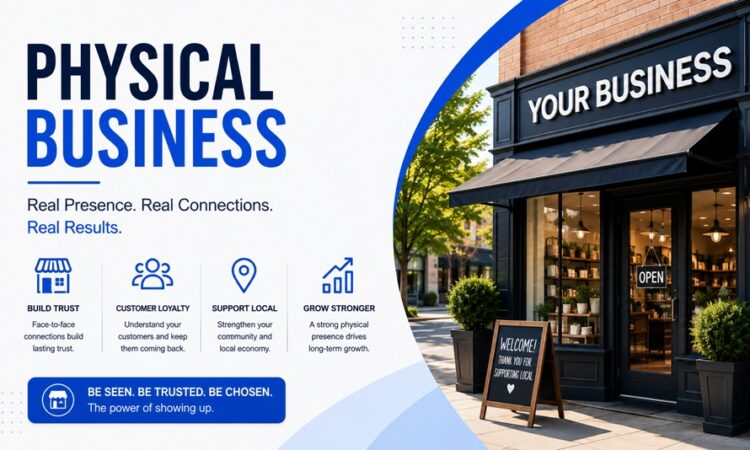
Trust and immediate experience are perhaps the most foundational. When a customer walks into a business, they can assess the product with all their senses. They can hold the garment, taste the food, test the mattress, speak with a knowledgeable person face to face, and walk out the door with their purchase in hand. The friction of waiting for shipping, the uncertainty about whether the product will match its digital representation, and the logistics of returning something that does not work out are all eliminated. For purchases where sensory evaluation matters, where trust is being established for the first time, or where immediate possession has value, a physical presence converts customers that an online listing simply cannot.
Community and relationship building happen more naturally in physical spaces than digital ones. A neighborhood coffee shop that knows your name and remembers your order has a customer relationship that transcends any loyalty app. A local gym whose trainers recognize members and adjust their guidance in real time creates retention that subscription apps struggle to match. The relational dimension of commerce is underestimated in purely economic analyses of physical versus digital models, but it shows up clearly in the data. Physical stores generate higher average transaction values when customers feel genuinely served, and referral rates among satisfied customers of local physical businesses consistently outperform those of online alternatives.
The ROPO effect, short for Research Online Purchase Offline, is a pattern that has grown significantly in the past several years and represents a powerful argument for maintaining a well-presented physical presence. Consumers increasingly research products, compare prices, and read reviews online before walking into a physical store to make the actual purchase. As of late 2025, U.S. e-commerce accounts for roughly 16 to 17 percent of total retail sales according to the U.S. Census Bureau, which means roughly 83 percent of retail purchases still conclude in a physical location, even among consumers who started their journey online. A physical business with a strong digital presence captures both the research and the purchase, while a purely online business captures only the minority of consumers who complete the full transaction digitally.
The Real Costs of Running a Physical Business
Honesty about the cost structure of physical businesses is essential for anyone evaluating whether to start or scale one. Physical presence requires real estate, and real estate is expensive. Prime commercial locations in major markets can cost tens of thousands of dollars per month in rent alone. Even modest retail or service spaces in secondary markets carry monthly lease obligations that represent fixed costs the business must cover regardless of revenue performance.
Beyond rent, physical businesses carry costs that online operations do not face in the same way. Utilities for lighting, heating, and cooling a commercial space. Maintenance and repair of the physical environment and any equipment it contains. Signage, visual merchandising, and the ongoing investment in making the space attractive and functional. Security systems and insurance coverage calibrated for a physical location. Staffing to be present during operating hours, which for many physical businesses means paying wages for time that is not always generating proportional revenue.
As the U.S. Small Business Administration’s resource guide for retail and service businesses outlines, location selection is one of the most consequential decisions for any physical business, affecting not just rent cost but also foot traffic, accessibility, proximity to complementary businesses, and the demographic composition of the surrounding customer base. Getting this decision right is worth investing significant research time before signing a lease.
The cost structure of a physical business is not inherently prohibitive, but it does require a business model with sufficient revenue per transaction or sufficient transaction volume to cover fixed costs and generate a profit. Businesses that operate on thin margins with low average transaction values face a harder path in a physical location than those with higher margins or naturally high ticket sizes.
How Experiential Retail Is Reinventing the Physical Business Model
The most significant development in physical retail in 2025 and 2026 is the deliberate shift from transaction-focused stores toward experience-focused environments. This shift is driven by a straightforward insight: if a customer can get the product delivered to their door in a day or two for the same price, the physical store needs to offer something the online channel cannot.
Dick’s Sporting Goods represents the most widely cited example of this transformation. The company’s House of Sport locations, spanning up to 150,000 square feet, feature climbing walls, batting cages, outdoor sports fields, and interactive technology that triggers product information when customers physically pick up an item. These locations do not just sell sporting goods. They create experiences that customers cannot replicate online and that give people a reason to drive to the store rather than simply adding items to a cart.
The same principle applies at a smaller scale across countless categories. Bookstores that host author readings and community events. Gyms that offer specialized training experiences unavailable through apps. Beauty retailers that provide personalized consultations. Kitchen supply stores that run cooking classes. These businesses have found that adding an experiential layer to their physical presence generates foot traffic, increases average transaction values, builds community loyalty, and creates social media content that extends their marketing reach organically.
Events increase foot traffic by approximately 20 percent on average according to experiential retail research, and the effect compounds over time as the business builds a reputation as a destination rather than merely a vendor.
Technology Inside Physical Businesses
The physical business of 2026 is not the physical business of a decade ago in terms of how it operates internally. Technology integration has transformed the efficiency and intelligence of physical operations in ways that have narrowed the operational gap between digital and physical models.
Point of sale systems have evolved from transaction processors into operational intelligence platforms. Modern POS systems track inventory in real time, identify best-selling products and slow-moving stock, generate reorder alerts, connect to e-commerce channels, and produce financial reports that give owners an accurate, current picture of their business. Payment processing has expanded to include contactless payments, digital wallets, buy now pay later options, and integrated loyalty programs that recognize returning customers and apply rewards automatically.
Inventory management powered by RFID tracking allows physical retailers to maintain lean stock levels without the stockouts that drive customers to competitors. Customer data platforms connected to in-store systems enable the kind of personalization that was once exclusive to e-commerce, allowing physical businesses to recognize returning customers, track their purchase history, and offer relevant recommendations.
Scheduling and booking software has transformed service-based physical businesses, enabling customers to book appointments online, receive automated reminders, and manage their bookings without requiring staff time. For businesses like salons, medical practices, fitness studios, and repair services, this capability reduces no-shows, improves capacity utilization, and elevates the customer experience simultaneously.
Starting a Physical Business: What the Process Actually Involves
For entrepreneurs considering launching a physical business, understanding the full scope of what the process involves helps set realistic expectations and timelines.
Location selection and lease negotiation are typically the first major milestones. Evaluating multiple locations, understanding the terms of commercial leases including lease duration, personal guarantee requirements, rent escalation clauses, and tenant improvement allowances, and negotiating from a position of knowledge rather than urgency takes time but directly affects the financial viability of the business for years.
Licensing and permits vary by business type, location, and local regulations. Retail food businesses require health department permits and food handler certifications. Businesses that serve alcohol require liquor licenses that can take months to obtain in competitive markets. Personal service businesses often require state licensing for practitioners. Building out or modifying a physical space typically requires building permits. Understanding and completing all required licensing before opening is essential, as operating without required permits carries significant legal and financial risk.
Build-out and fit-out, which covers the physical renovation, equipment installation, and interior design that transforms a raw commercial space into a functional business environment, represents a major capital investment for most new physical businesses. Costs vary enormously based on the type of business, the condition of the space, and the level of finish required, ranging from a few thousand dollars for a minimally built out service space to hundreds of thousands for a fully fitted restaurant or specialty retail location.
Staffing, training, and establishing operational systems before opening day position the business to deliver consistent service quality from the first customer interaction. The businesses that launch with documented procedures, trained teams, and tested operations create better first impressions and reach consistent performance faster than those that figure things out under live conditions.
The Physical Business in an Online World
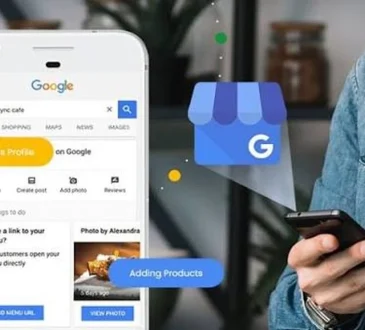
The most successful physical businesses in 2026 are not those that resist the digital world but those that integrate it deliberately. A Google Business Profile that is accurate, well-reviewed, and regularly updated makes a physical business discoverable to consumers searching for exactly what it offers in their area. An Instagram presence that showcases the experience of being in the space drives foot traffic from customers who want to replicate what they see. A website that enables online booking, communicates hours and location clearly, and reflects the quality of the in-person experience converts browsers into visitors.
Physical presence and digital presence are not competing strategies. They are complementary assets that, when both developed well, create a business that is harder to displace than either could be alone. A purely digital business can be undercut by a lower-cost online competitor overnight. A physical business with a loyal local customer base, a distinctive experience, and a strong community reputation has a moat that no Amazon algorithm can easily cross.
This article is for informational purposes only and does not constitute business, legal, or financial advice. Please consult qualified professionals before making decisions about starting or operating a physical business.