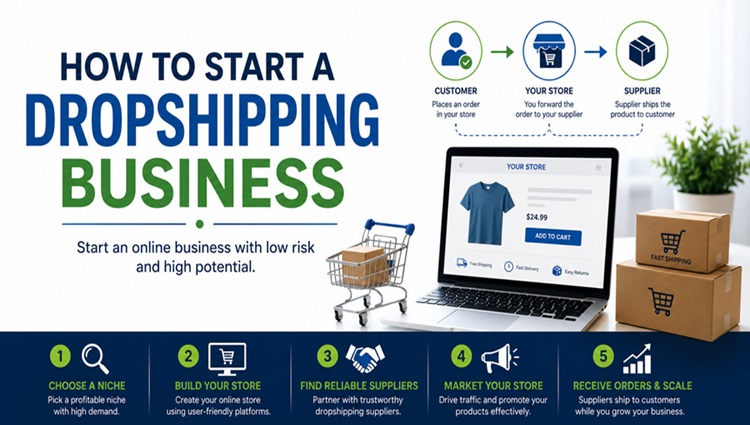
Dropshipping has become one of the most talked about business models of the past decade, and for good reason. It allows anyone with a laptop and an internet connection to start selling products online without ever holding inventory, renting warehouse space, or managing shipping logistics. The supplier handles all of that. You focus on finding customers and making sales.
But here is the part that most beginner guides gloss over: dropshipping is not a passive income machine you set up once and walk away from. It is a real business that requires real effort, smart decisions, and consistent attention. The good news is that with the right approach, it is absolutely achievable for first time entrepreneurs.
Here is how to do it properly from the ground up.
Choose a Niche Before You Do Anything Else
The biggest mistake new dropshippers make is trying to sell everything to everyone. They build a general store stocked with hundreds of random products and then wonder why their conversion rate is near zero. Customers do not trust general stores the way they trust specialist ones.
Choosing a niche means deciding on a specific product category or customer type to focus on. It could be pet accessories, home gym equipment, eco friendly kitchen products, or travel organizers. The more specific you are, the easier it becomes to build a brand, attract the right audience, and stand out from the competition.
When evaluating a niche, look for three things: consistent demand, reasonable profit margins, and a customer base that is reachable through targeted marketing. Tools like Google Trends can help you gauge whether interest in a category is growing, stable, or declining before you commit.
Find Reliable Suppliers
Your supplier is the backbone of your dropshipping business. They manufacture or stock the products, handle packaging, and ship orders directly to your customers. If they are unreliable, your customers will suffer the consequences and your reputation will take the hit.
The most widely used platforms for finding dropshipping suppliers include AliExpress, Spocket, and SaleHoo. Each has its strengths. AliExpress offers an enormous product catalog at low prices, making it popular for beginners. Spocket focuses on suppliers based in the US and Europe, which typically means faster shipping times. SaleHoo provides a vetted directory of wholesalers and is a solid choice if you want extra confidence in supplier quality.
Before committing to any supplier, order samples of the products you plan to sell. This lets you evaluate quality firsthand, assess packaging standards, and get a realistic sense of shipping times. Never skip this step.
Build Your Online Store
Once you have your niche and suppliers lined up, you need a place to sell. Shopify is the most popular platform for dropshipping stores and for good reason. It is beginner friendly, integrates seamlessly with tools like DSers and AutoDS for supplier management, and offers a wide range of themes to build a professional looking store without any coding knowledge.
Your store needs to do a few things well. It needs to load quickly, look trustworthy, and make the buying process as frictionless as possible. Invest time in writing genuine product descriptions rather than copying the supplier text word for word. Add clear photos, honest delivery timeframes, and a straightforward returns policy. These details build the trust that converts visitors into buyers.
Understand Your Pricing Strategy
Pricing in dropshipping requires balancing competitiveness with profitability. A common approach is to aim for a markup of two to three times the product cost, though this varies depending on the category and the perceived value of your brand.
Do not forget to account for all your costs when setting prices. This includes the product cost, transaction fees, advertising spend, platform fees, and any apps or tools you use to run your store. Many beginners price their products without accounting for advertising costs and then discover their margins are far too thin once they start running paid campaigns.
According to Shopify’s own research and business guides, successful dropshipping stores typically focus on building a strong brand and customer experience rather than competing purely on price. Trying to be the cheapest option in the market is a race to the bottom that independent dropshippers rarely win against larger retailers.
Drive Traffic to Your Store
A beautiful store with no visitors generates zero sales. Getting traffic is where most of the ongoing work of dropshipping lives, and there are several approaches worth considering.
Paid advertising through platforms like Facebook, Instagram, and TikTok can generate results quickly but requires budget and a willingness to test and iterate. Start with small daily budgets, test multiple ad creatives, and scale what works while cutting what does not.
Organic social media is slower but builds something more durable. Creating content around your niche, whether that is product demonstrations, lifestyle content, or educational posts, attracts an audience that is genuinely interested in what you sell.
Search engine optimisation is another channel worth investing in from the start. Writing blog content around topics your target customers search for brings consistent traffic over time without ongoing ad spend.
Handle Customer Service Like a Real Business
One area where many dropshippers underinvest is customer service. Because they are not handling the products themselves, they sometimes feel disconnected from the customer experience. This is a mistake.
Respond to queries promptly. When issues arise with orders, take ownership of the situation even if the problem originated with the supplier. Customers do not know or care about your supply chain. They bought from you, and you are responsible for making it right.
A reputation for excellent service generates repeat purchases and positive word of mouth, both of which are enormously valuable in a business model where customer acquisition costs are a constant pressure.
Final Thoughts
Starting a dropshipping business is genuinely accessible to anyone willing to put in the work. The barriers to entry are low, the startup costs are minimal compared to traditional retail, and the learning curve, while real, is manageable with the right guidance. Focus on a specific niche, work with trustworthy suppliers, build a store that earns customer confidence, and treat marketing as an ongoing discipline rather than an afterthought. Do those things consistently and the results will follow.