Graphic Facilitation vs. Graphic Recording: Choosing the Right Visual Approach for Your Meeting

Meetings, strategy sessions, and large events often generate an overwhelming amount of information. Participants may leave with pages of notes, yet only a small portion of the discussion is remembered or acted upon. This gap between conversation and clarity is a common challenge in business environments.
Visual approaches like graphic recording and graphic facilitation help solve this problem. Both transform spoken ideas into visual form in real time, improving engagement and understanding. However, despite their similarities, they serve different roles. Knowing the difference will help you choose the right solution for your meeting goals.
What Is Graphic Recording?
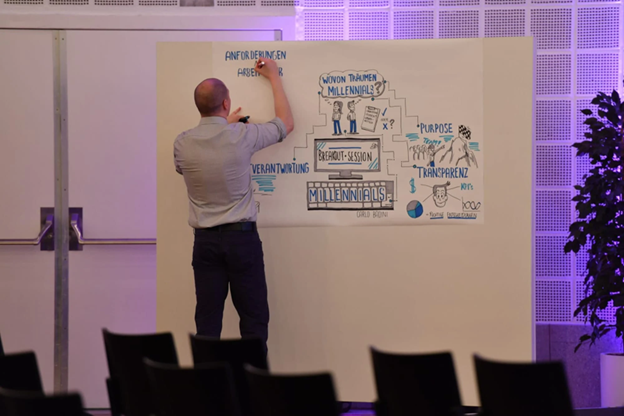
Graphic recording is the real-time visual documentation of a conversation, presentation, or event. While participants speak, a visual professional listens closely and captures key ideas, themes, and connections using words, symbols, and simple illustrations.
This approach works best when the meeting structure is already in place. Graphic recording enhances clarity without influencing the discussion, making it ideal for strategy sessions, workshops, conferences, and large group meetings where capturing insights accurately is the main priority.
What Is Graphic Facilitation?
Graphic facilitation goes beyond visual capture and into meeting leadership. A graphic facilitator helps design the session, guide the conversation, and use visuals as a tool to support collaboration, focus, and decision-making throughout the meeting.
Rather than remaining neutral, the facilitator actively shapes the discussion. This approach is best when a group needs help structuring conversations, managing dynamics, or moving toward alignment and clear outcomes, especially in complex or high-stakes situations.
Key Differences Between Graphic Recording and Graphic Facilitation
The main difference lies in responsibility and involvement. Graphic recording focuses on listening and visually documenting what is said, while graphic facilitation involves designing and leading the meeting itself, using visuals as part of the process.
Choosing between the two depends on your needs. If you already have a meeting leader and want a powerful visual summary, graphic recording is the right fit. If you need help guiding the conversation and shaping outcomes, graphic facilitation is the better choice.
When Visual Communication Makes the Biggest Impact
Visual communication significantly improves understanding and memory. When people can both hear and see information, they are more likely to retain it, make sense of complex ideas, and stay engaged throughout the discussion.
This is why visual methods are increasingly used in business settings. By transforming abstract conversations into visible stories, teams walk away with shared understanding and a clear reference point long after the meeting ends.
What Makes an Effective Graphic Recorder?
An effective graphic recorder is more than a fast sketcher. They must listen actively, identify what truly matters, and organize information in a way that is visually clear and meaningful in the moment.
Strong synthesis skills, adaptability, and storytelling ability are essential. The goal is not decoration, but clarity—turning complex conversations into visuals that support insight, recall, and action.
Different Formats of Graphic Recording
Graphic recording can be adapted to many formats, whether meetings are held in person, online, or a mix of both. Live, in-person sessions create large, engaging visuals that energize the room and become memorable focal points.
Virtual graphic recording offers similar benefits for remote teams by keeping participants engaged and reducing fatigue. Post-event visual summaries extend the value even further, providing a lasting asset that can be shared, reviewed, and reused.
Why Organizations Benefit from Graphic Recording
Organizations that rely on frequent meetings often struggle with alignment and follow-through. Graphic recording helps bridge this gap by making discussions visible, structured, and easier to remember.
By increasing engagement and retention, visual recording supports better decision-making and clearer communication. It turns meetings from forgettable conversations into meaningful experiences that drive understanding and action.
Conclusion
Graphic facilitation and graphic recording both harness the power of visuals, but they serve distinct purposes. One leads and shapes the conversation, while the other captures and clarifies it. Choosing the right approach depends on whether you need guidance, documentation, or both.
When used thoughtfully, visual methods transform meetings into shared experiences with lasting impact. By matching the right visual approach to your goals, you can improve clarity, engagement, and outcomes across your organization.